


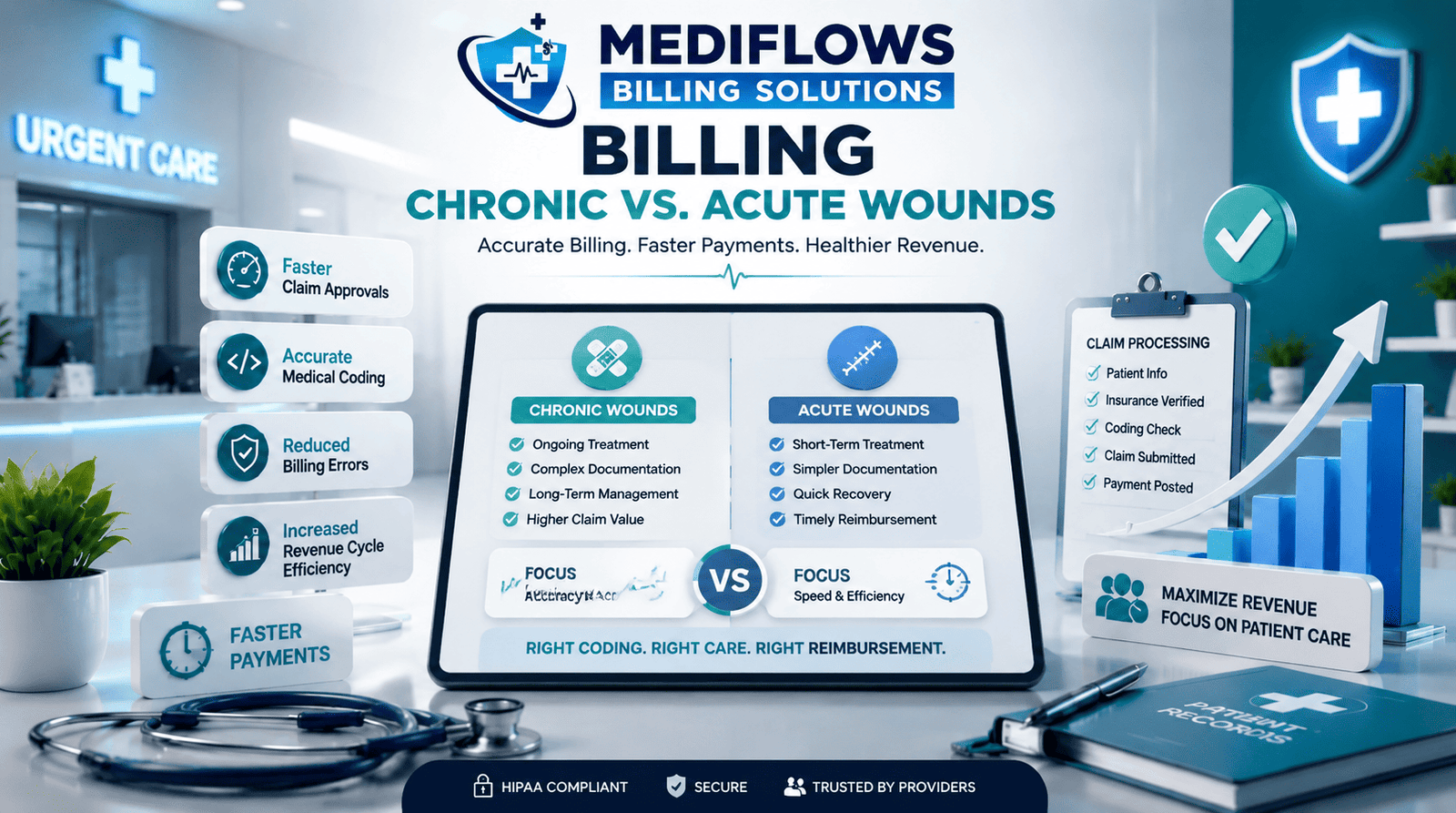
Accurate wound care billing hinges on correctly distinguishing chronic from acute wounds in your documentation and coding. While both involve skin injury, they follow entirely different billing rules. Here’s how you can avoid common ICD-10 linkage errors and protect your reimbursements.
Know the Difference Between Chronic and Acute Wounds
Chronic wounds (like diabetic ulcers or pressure injuries) require long-term care and specific coding. Acute wounds (like lacerations or surgical incisions) are short-term and tied to a single event.
What to include:
This clarity ensures your claims align with medical necessity and coding guidelines.
Use Precise ICD-10 Diagnosis Codes
Unspecified or incorrect ICD-10 codes are a top reason for wound care denials. Always select codes that reflect location, laterality, severity, and underlying cause.
Tips:
Document Thoroughly for Medical Necessity
Payers require detailed clinical evidence to justify repeated or complex wound care. Vague notes lead to automatic denials—especially for chronic wounds.
Apply Correct CPT and Modifiers
Wound care procedures have strict bundling rules. Using the wrong CPT code or missing a modifier can underpay or reject your claim.
Proper coding ensures you’re paid for the work you perform.
Final Thoughts:
While every wound tells a clinical story, only accurate coding and documentation translate that story into payment. Small, consistent habits—defining acuity, using specific ICD-10 codes, documenting thoroughly, and coding procedures correctly—go a long way in preventing denials and securing revenue.
Prevention is better than cure. Start with your daily routine — your body will thank you.